Medical device and IVD contract manufacturing in Malaysia.
Certified to ISO 13485 since 2011, Nagoya manufactures precision plastic components for medical device and in-vitro diagnostics programmes, with experience across eight segments from endoscopy and haemodialysis to laboratory consumables. Today we mould in a 10,000 sq.ft. ISO Class 8 cleanroom, with part-level traceability and processes validated to IQ, OQ and PQ. An ISO Class 8 assembly and packaging cleanroom, targeted for qualification in Q2 2027, is designed to take active and non-active device and IVD programmes from moulded part to sealed, labelled product.
ISO Class 8 cleanroom injection moulding.
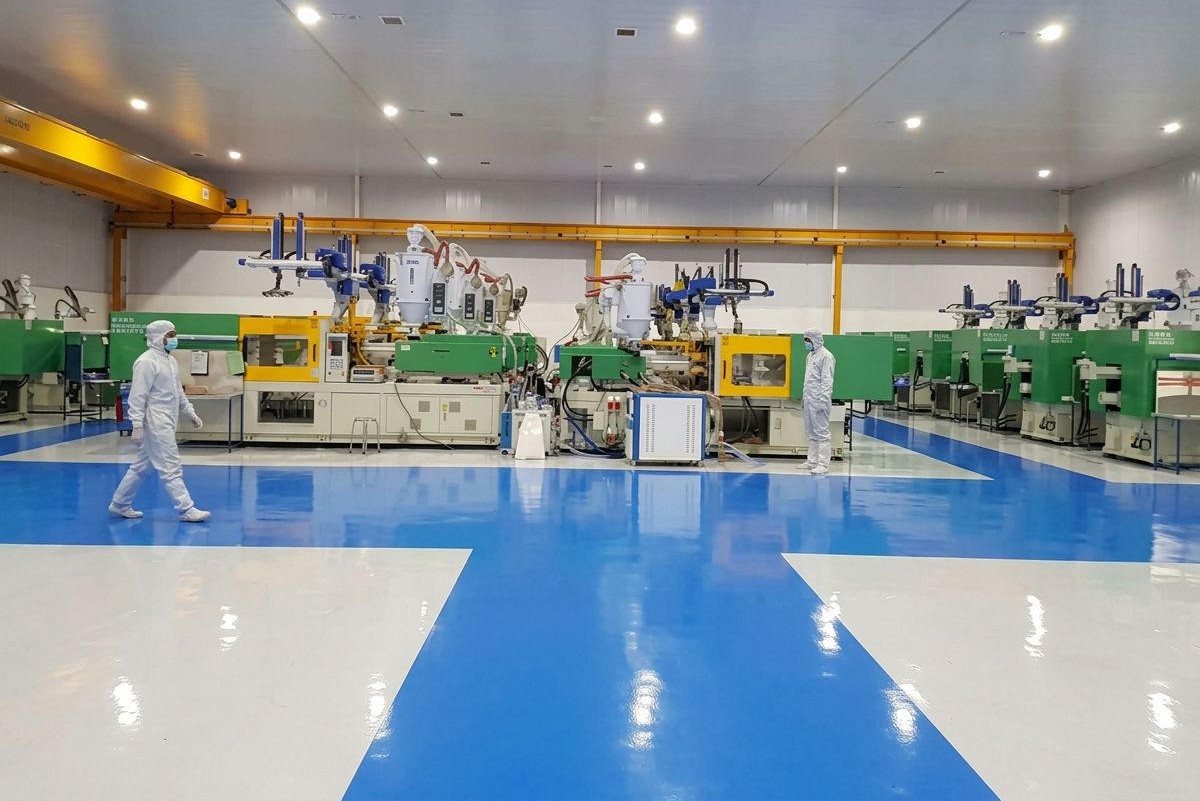
ISO Class 8 injection moulding plant dedicated to medical device and IVD programmes
Automated injection moulding machines from 50T to 280T inside the cleanroom
Certificate 510116, KGS Certification Sdn. Bhd.
Follow the material. Control the change.
Resin batch
Resin batch certification and identification at receipt.
Production lot
Continuous traceability from resin batch certification to finished production lot.
Component identity
Part-level laser Data Matrix Code marking supporting Device History Record and UDI requirements.
Change review
Documented change control over materials, process parameters and sub-tier set-ups, with customer notification and impact re-validation.
The marking format, record requirements and validation scope are agreed for each programme.
Validation and sterilization
- IQ, OQ and PQ of tools, equipment and processes, to our routine or your protocol
- Process capability studies, control plans and measurement system analysis
- Sterilization validation managed by Nagoya, executed and treated by a qualified partner, with validation documentation available to you
Materials for medical programmes
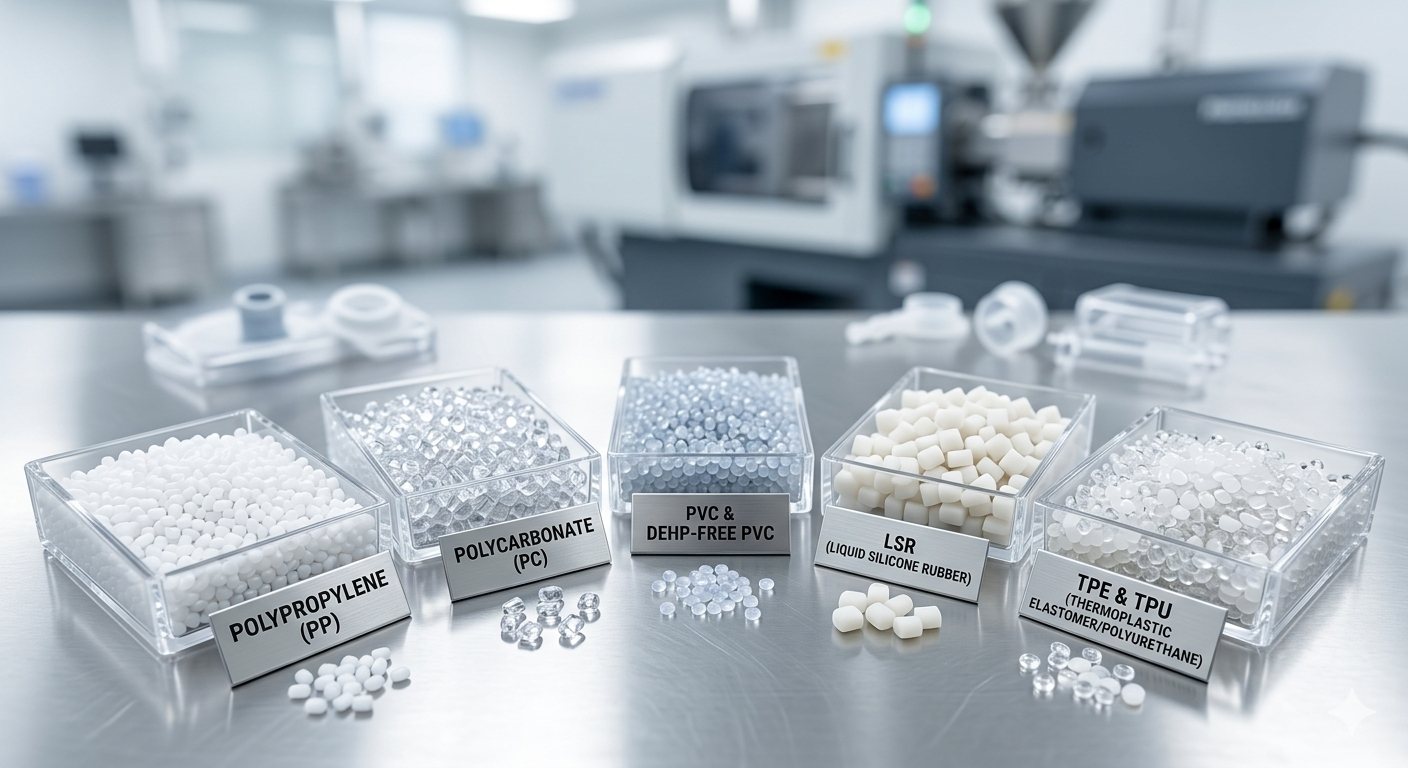
Medical and biocompatible resins processed in our cleanroom: PP, PC, PVC, DEHP-free PVC, LSR, TPE, TPU, TPV, K-Resin, PMMA, ABS, LDPE, HDPE, TPS-SEBS and EVA. Specialty, engineering and optically clear resins are also used in medical programmes; cleanroom suitability is confirmed per resin at RFQ stage.
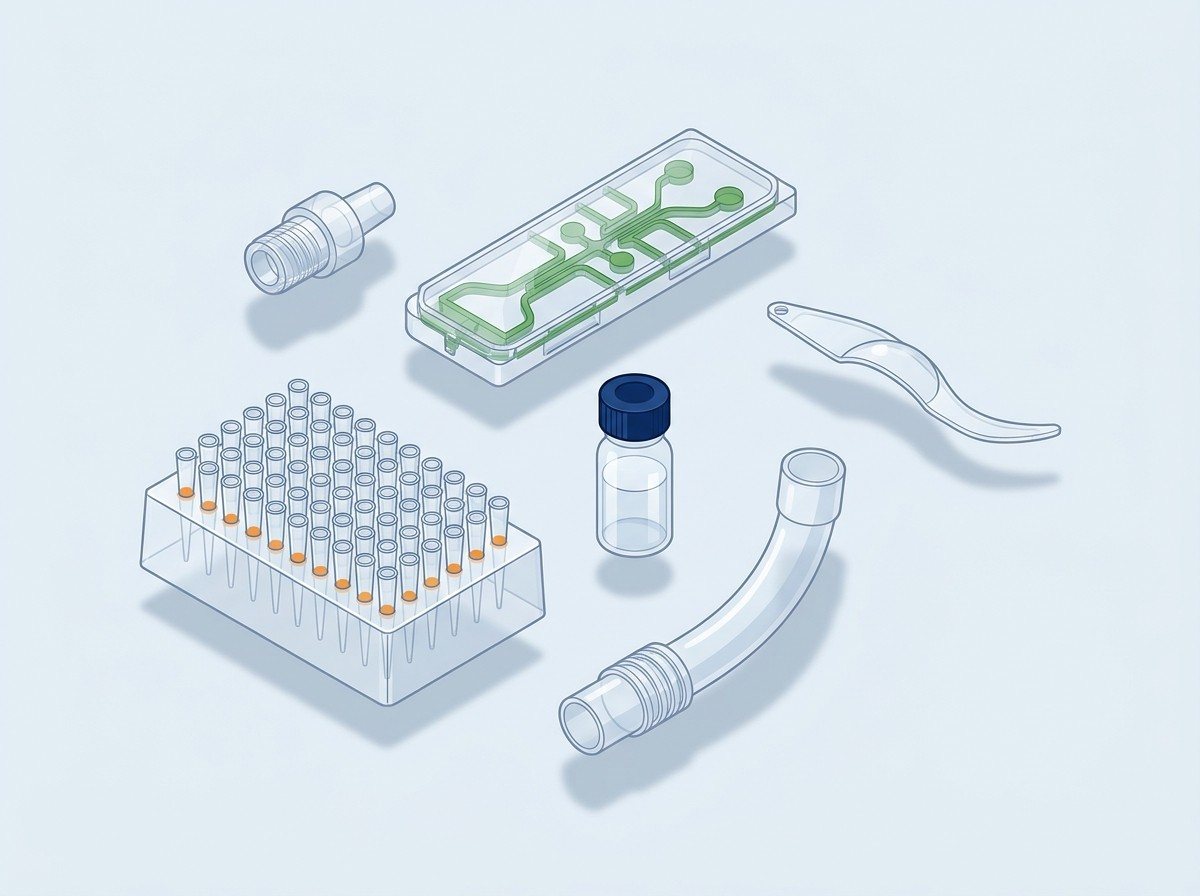
Current and past medical programmes span eight segments.
Endoscopy
Haemodialysis
Oxygen therapy
Airway management
Laboratory consumables
Life science
Ophthalmic
Urinary management systems
Cleanroom assembly and packaging for active and non-active devices and IVD.
An expansion approved by our Board, with qualification targeted for Q2 2027. It extends our medical work from moulded components to turnkey, cleanroom-assembled and packaged products.
ISO Class 8 assembly and packaging cleanroom
Secondary processes and assembly: UV curing, solvent and adhesive bonding, ultrasonic welding, heat staking and cold-press assembly. Validated pouch sealing and primary UDI labelling (barcodes, QR codes, pictograms) under ISO 13485, with secondary packaging, shipping labels and logistics coordination.
Controlled-environment moulding plant
Additional moulding capacity for medical device and IVD programmes.
Looking further ahead, our planned 2028 factory at Kulim Hi-Tech Park is earmarked for expanded cleanrooms.
What you receive at supplier qualification.
Certificates and scope statements
Current certificates with full scope statements for every management system we hold.
Validation and calibration records
Validation records, calibration records and gauge R&R studies, available at audit.
Quality agreement and partner records
Our standard quality agreement template, plus supplier qualification records and partner audit status.
Site audit at any stage
Audits and site visits are welcome, from first contact onwards.
From development to a controlled production process.
New products and transfers follow five stages: a confidentiality agreement and scope review, DFM / DFA, tooling and first article, IQ / OQ / PQ validation, then a controlled handover to serial production.
Help us understand your project.
Share your drawings, volumes and timeline under a confidentiality agreement (CDA), and we will assess capability and capacity against your specification.
Your product
Application, drawing or 3D model, material preference, and any critical dimensions or cosmetic requirements.
Your programme
Estimated annual demand, production timing, target market, and whether this is a new tool or an existing tool transfer.
Your manufacturing scope
Moulding, coating, printing, marking, assembly, packaging, and the inspection or validation documents you require.